
April 2025 Leverage AI for OSINT
AI can be extremely useful for searching and sorting through large amounts of information on the internet. One of its most natural uses is to search for and extract sources. The internet allows us to make connections between multiple pages, which makes recursion a key issue. In modern AI tools such as ChatGPT, OpenAI has chosen to make their “advanced search” service available. Although quite basic in reality, this service enables an AI “agent” (an agent is a program that acts autonomously to accomplish a specific task) to search the web and extract relevant information from the pages it visits. This search allows access to high-quality, relevant content for a given topic and research area. This makes it an excellent source of information for generating prompts later on!
AI for OSINT
Hiding public information is more important than ever as bots can process large amount of data off the regulation rails.
The lack of regulation regarding AI processing of personal data is astonishing.
OSINT, or “Open Source Intelligence,” refers to information that is publicly available and not classified. Open Source Intelligence is a fundamental element for intelligence operations. While commonly used in the intelligence field, OSINT methods are actually used in everyday life. The core principles are the same: cross-reference information to form a clearer picture of a subject or event.
When this cross-referencing of information is automated, it can provide quick, high-quality insights. However, it cannot replace human work in crucial cases—missing, inaccurate, biased, or false information can still occur. It’s important to keep in mind that AI doesn’t replace human work but can assist in research.
The advanced search feature in ChatGPT allows users to search the web and extract relevant data from visited pages. This can be particularly useful for researchers, journalists, and anyone needing access to reliable and up-to-date information. This feature is also available in other open-source projects like OpenWebUI.
However, it poses significant risk and concerns about processing personal information.
Papers and materials
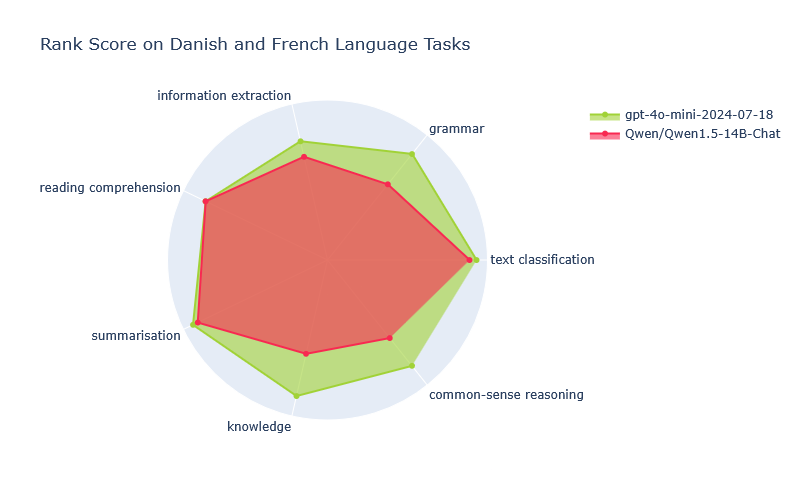
https://euroeval.com/extras/radial_plotter/ This tool can be used to compare individual models across each task in the benchmark, using a so-called radial plot.
News AI Generated Videos now runs on 6GB GPU (30 seconds of processing time for 10s video)
April 2025: AI Highlights
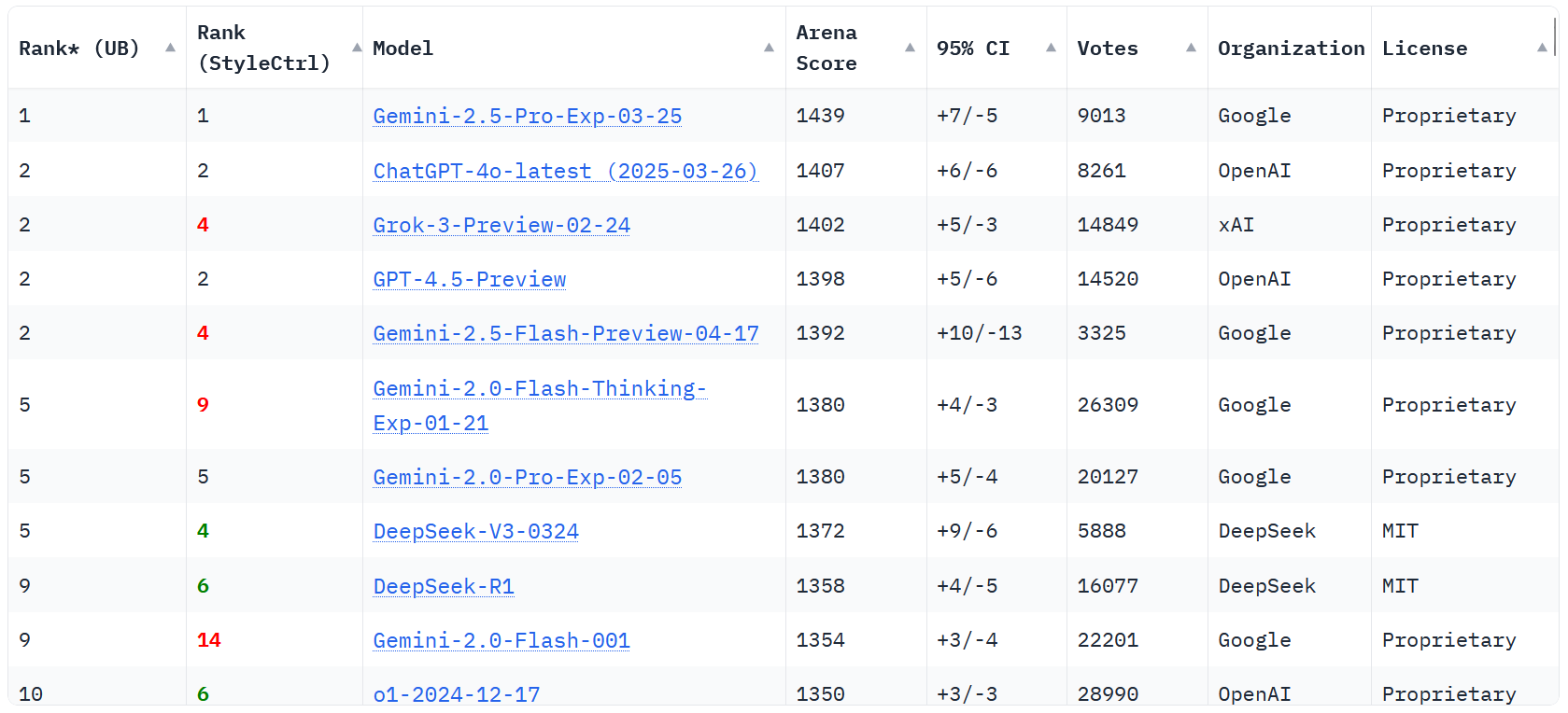
Leaderboard:
Journée Deep Learning pour la Science (JDLS).
Deep Learning for Science 2025 (France)
The speakers are experts from a wide range of disciplines—such as physics, biology, medicine, social sciences, etc.—who will share their research that applies AI in these fields.
We can expect concrete examples such as the use of neural networks for data analysis in physics (e.g., astrophysics or material science), biology (e.g., microscopic image analysis, genomics), medicine (e.g., medical imaging, AI-assisted diagnostics), and social sciences (e.g., legal text analysis, socio-economic data analysis).
For example, at the previous edition (JDLS 2024), topics ranged from jurimetrics using large language models to quantify court decisions to multimodal data analysis in astrophysics.
As such, the Deep Learning for Science Day 2025 enjoys strong institutional support, ensuring the event remains free of charge and rich in interdisciplinary exchanges around AI for research. Contributions from these partners strengthen the JDLS’s goal: fostering experience-sharing and disseminating AI methods across all scientific fields. jdls-2025.sciencesconf.org